Are you considering diversifying your investment portfolio in 2024? Investing in gold and silver can offer a hedge against inflation and economic volatility. Allocating 5-15% of your assets to these precious metals is strategic.
To understand this complex terrain effectively, stay informed about market trends, economic indicators, and the reputation of dealers. Understanding the differences between gold and silver investments and their tax implications is critical. When considering a gold investment in South Africa, it's important to be aware of any regulatory changes or geopolitical factors that could impact the market.
A clear understanding of the risks and potential rewards of precious metals in South Africa. By staying informed and conducting thorough research, investors can make well-informed decisions and effectively understand the nuances of the gold and silver market.
Our Quick Summary
- Allocate 5-15% of your portfolio to gold and silver to hedge against inflation and economic uncertainty.
- Opt for reputable dealers with LBMA certification, transparent pricing, and straightforward buyback policies.
- Monitor market trends and economic indicators, such as interest rates and inflation, to make informed investment decisions.
- Diversify your investments among physical metals, ETFs, and mining stocks to reduce risk and enhance stability.
- Consult a tax professional to understand the tax implications of your gold and silver investments.
Understanding Precious Metals
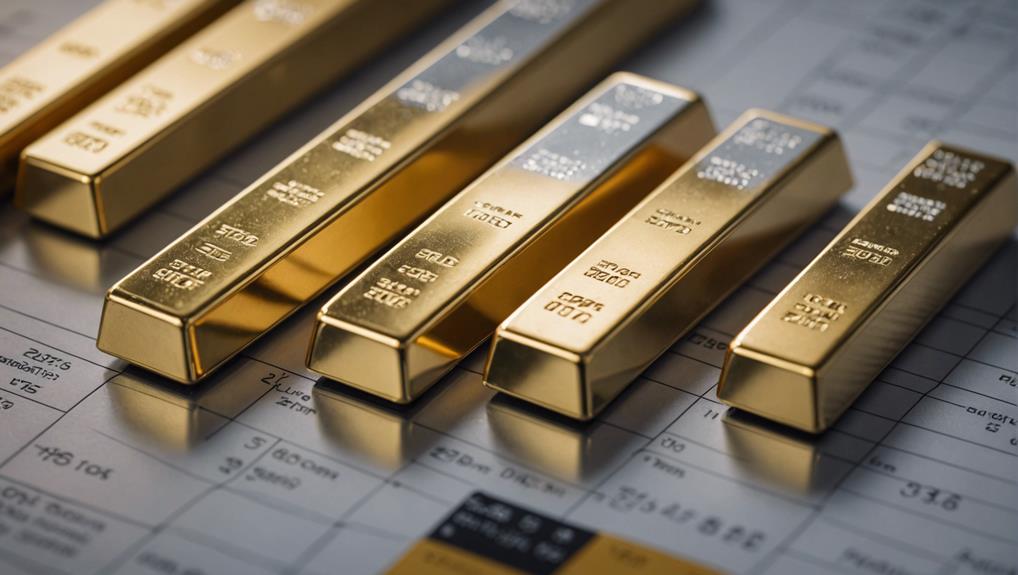
Understanding precious metals like gold and silver is crucial because they've consistently held value due to their rarity and durability. Gold and silver bullion have long been considered safe-haven assets, particularly during economic uncertainty and market volatility.
Their intrinsic value stems from their limited supply and historical role as currency and store of value. In periods of inflation and geopolitical instability, the value of these metals typically rises. Investors often turn to gold and silver as a hedge against currency devaluation and financial crises.
Recognizing these metals' unique properties and historical significance allows for informed investment decisions, ensuring a resilient portfolio during turbulent times.
Benefits of Gold and Silver
Investing in gold and silver offers multiple benefits that can enhance financial stability. These metals hedge against inflation and economic uncertainty, preserving your wealth over time.
Additionally, they provide portfolio diversification, which reduces overall risk and enhances stability, giving you the security of tangible assets.
Hedge Against Inflation
Due to their intrinsic value and limited supply, gold and silver have long served as effective safeguards against inflation. These precious metals help preserve purchasing power when fiat currencies depreciate.
During economic uncertainty, the demand for gold and silver often increases, increasing prices. Central banks frequently bolster their gold reserves, highlighting their role as a reliable hedge against inflation.
Investing in gold and silver can protect your wealth from the diminishing value of money caused by inflationary pressures. This investment is crucial for maintaining financial stability in volatile economic environments, ensuring your assets retain their value over time.
Portfolio Diversification Strategy
Including gold and silver in your investment portfolio offers significant benefits, such as decreased risk and improved long-term performance. Incorporating these precious metals into your investments promotes asset diversification, which is crucial for navigating market volatility.
Historically, gold and silver have retained their value, serving as safe-haven assets during economic crises. This stability helps protect against inflation and currency devaluation, providing a buffer during turbulent times.
Allocating a portion of your portfolio to these metals reduces overall risk and enhances resilience and balance. In the long run, this diversification strategy can lead to better performance and a more robust investment approach, ensuring preparedness for various market conditions.
Tangible Asset Security
Physical gold and silver grants you direct control and ownership, serving as a tangible safeguard against economic uncertainties.
These metals excel in wealth preservation, retaining value even during inflation.
Unlike paper investments, gold and silver carry no counterparty risks, ensuring you aren't reliant on another party's financial obligations.
This renders them a reliable safe haven during financial instability and market volatility.
Types of Gold and Silver Investments

Investing in gold and silver offers several options. Physical forms like bullion, coins, ETFs, and mining stocks are popular choices. Gold and silver coins provide tangible ownership, allowing you to hold your investment physically.
Alternatively, gold ETFs (Exchange-Traded Funds) offer liquidity and easy market access without needing physical storage. ETFs track the price of gold, which can be traded like stocks, offering convenience.
Investing in gold and silver mining stocks exposes you to the industry's growth and potential dividends. Understanding these investment types helps diversify your portfolio, catering to different risk tolerances and preferences.
Choosing Between Gold and Silver
When choosing between gold and silver, consider their historical performance, market volatility, and your investment purpose. Gold's scarcity and status as a store of value make it reliable during economic uncertainty.
In contrast, industrial demand and technological advancements can influence silver's price. Understanding these factors will help you make a decision that aligns with your financial goals.
Historical Performance Comparison
Comparing the historical performance of gold and silver reveals that gold has significantly outperformed silver, showing a 5,000% increase in value since the 1970s. This difference is crucial for anyone considering investment in precious metals.
Gold bars have been a reliable option for long-term security, while silver bars may hold potential due to silver's industrial applications.
The gold-to-silver ratio, which measures how many ounces of silver are needed to buy one ounce of gold, can indicate the relative value between the metals. Historically, a lower ratio may suggest that silver is undervalued compared to gold.
Market Volatility Factors
Choosing between gold and silver during market volatility requires understanding their historical price movements and correlations with other assets. Gold is traditionally viewed as a safe-haven asset, offering stability and a reliable store of value during market turbulence.
In contrast, silver is more volatile, presents higher potential returns, and carries greater risk. Due to its industrial uses, factors like economic shifts can significantly impact silver's price.
Analyzing these dynamics is crucial when investing in gold or silver ETFs. Knowing how gold and silver respond to market changes will help you make informed decisions, balancing safety and potential gains during uncertain times.
Investment Purpose Considerations
Understanding your investment goals is crucial in deciding whether to prioritize gold's stability or silver's growth potential. If your primary aim is wealth preservation, consider gold for its historical stability. Gold has retained its value for centuries and is a safe haven during economic uncertainty.
Conversely, silver might be better if you seek potential price appreciation and benefits from industrial demand. Due to its lower price compared to gold, silver also offers portfolio diversification.
Aligning your investment goals with the unique strengths of each metal will help you make an informed choice that supports your financial objectives, whether it's stability or growth.
Risks of Investing in Precious Metals

Investing in precious metals such as gold and silver entails several risks that need thorough consideration, as they can influence the success of your investment strategy. Mitigating gold investment risks involves staying informed about market trends and seeking expert advice to develop a diversified investment portfolio. Additionally, it is crucial to carefully assess the potential impact of economic factors, geopolitical events, and currency fluctuations on the price of precious metals. Implementing risk management strategies such as setting stop-loss orders and regularly reviewing your investment portfolio can also help minimize potential losses.
- Price Volatility: The values of gold and silver can experience significant fluctuations, potentially leading to losses.
- Counterparty Risks: Investing in paper gold products carries the risk of losses if the issuing institution defaults.
- Storage Challenges: Holding physical metals necessitates secure storage solutions, which can be costly and complex.
- Economic and Geopolitical Influences: Global market changes and political events can impact precious metal prices, affecting your returns.
Comparing Investment Options
Comparing investment options in gold and silver requires understanding the distinct benefits and drawbacks. Gold ETFs (exchange-traded funds) provide easy investment and liquidity, offering a variety of market choices. Investing in gold mining companies can yield potential dividends and growth opportunities, appealing to those seeking indirect exposure.
Physical gold and silver investments are considered the safest but necessitate secure storage and can be invaluable during economic crises. Some gold ETFs allow redemption for physical metals, offering the flexibility to convert holdings into tangible assets.
Assess these factors to determine which option aligns best with your investment goals and risk tolerance.
Tax Implications

When evaluating your investment options, consider the tax implications of holding gold and silver, as profits from selling these metals are subject to capital gains tax.
- Holding Period: Long-term capital gains tax rates apply if you hold gold or silver for over a year. Short-term capital gains tax rates are applicable for holdings less than a year.
- Jurisdiction: Tax treatment varies based on location, so local laws are crucial.
- Individual Circumstances: Your financial situation can impact your tax liability.
- Consult a Tax Professional: To understand your tax implications, always seek advice from a tax professional.
Understanding these factors will help you make informed investment decisions.
Practical Investment Tips
To maximize your investments in gold and silver, allocate 5-15% of your portfolio to these metals. This strategy helps to decrease risk.
Stay informed on market trends and economic indicators to make well-informed decisions.
Choose reputable dealers and secure storage options to protect your assets.
Diversify Your Portfolio
Expanding your portfolio with gold and silver can safeguard your wealth and provide a reliable hedge against market volatility. For retail investors, diversifying through gold mutual funds and silver mutual funds can reduce overall risk and improve long-term wealth preservation. Here are practical tips:
- Allocate a Portion: To protect against economic downturns, dedicate 5% to 15% of your portfolio to gold and silver.
- Include Physical Assets: Physical gold and silver ensure you have tangible assets with intrinsic value.
- Mix Investment Forms: Combine investments in mutual funds, ETFs, and physical metals to add layers of security.
- Regular Reviews: Periodically review your allocations to adjust for market changes and maintain balance.
Monitor Market Trends
Monitoring market trends is crucial for making informed investments in gold and silver. Track gold and silver prices on reliable financial websites such as Reuters and Bloomberg. Various gold and silver investing apps are also available that provide real-time market updates and analysis. These apps allow investors to stay updated on the latest trends and decide when to buy or sell. By staying on top of market trends through reliable financial websites and investing apps, investors can maximize their potential for success in the gold and silver market.
Economic indicators like interest rates and inflation significantly influence the prices of these metals. Geopolitical events, including trade disputes and political instability, also impact their value.
Understanding these trends helps you anticipate market shifts and make sound investment decisions. Regularly reviewing global economic factors ensures you stay ahead in these volatile markets.
Staying informed is key to navigating the complexities of investing in gold and silver.
Choose Reputable Dealers
Choosing reputable dealers ensures you receive authentic, high-quality products when investing in gold and silver. Consider these factors to make informed decisions:
- Reputation: Select dealers with a long-standing reputation in the industry. Verify their credentials and read customer reviews.
- Certifications: Ensure the dealer offers products with LBMA certification and assay certificates for guaranteed authenticity.
- Transparent Pricing: Choose dealers who provide clear, transparent pricing without hidden fees. This ensures you get a fair deal.
- Buyback Policies: Opt for dealers with straightforward buyback policies, making it easier to sell your investment when needed.
Historical Performance

Gold has historically proven to be a robust long-term investment, demonstrating significant appreciation and reliability. Since the 1970s, its value has increased by over 5,000%, making it an effective means of preserving wealth. On average, gold appreciates about 10% annually, consistently outpacing inflation. While the gold spot price can exhibit short-term volatility, its stability is well-documented.
Silver, though more volatile than gold, also offers substantial long-term returns. Although its spot price may experience sharper fluctuations, it remains a valuable component of a diversified investment portfolio.
Understanding the historical performances of both gold and silver can guide informed decisions when investing in precious metals for 2024 and beyond. Gold has historically been seen as a safe haven investment during economic uncertainty, while silver has a dual role as both a precious metal and an industrial metal. Investors can better understand their potential future growth and stability by researching these metals' past performance. When considering gold futures investment tips, investors should also consider factors such as inflation, interest rates, and geopolitical tensions, which can all impact the value of precious metals. By being informed about these historical performances and current market factors, investors can make more educated decisions when investing in gold and silver for the years ahead.
Market Trends for 2024
In 2024, global economic events and geopolitical tensions will significantly influence gold and silver prices. Several market trends will be crucial for making informed investment decisions:
- Geopolitical Risks: International conflicts and political instability will likely drive investors toward safe-haven assets like gold and silver.
- Gold Futures: Predicting future gold prices will aid in understanding market sentiment and making timely investments.
- Silver Futures: Industrial demand for silver, especially in technology, will impact its price. Monitoring silver futures can provide insights into market expectations.
- Interest Rates and Inflation: Changes in interest rates and inflation will affect gold and silver's appeal as alternative investments for wealth preservation.
Understanding these trends will help manage the 2024 market effectively.
Conclusion
Investing in gold and silver in 2024 demands careful planning and knowledge. Allocate 5-15% of your portfolio to hedge against inflation and economic uncertainty.
Stay informed about market trends, choose reputable dealers, and diversify your investments. Regularly review and adjust your allocations based on current market conditions.
Understanding the historical performance and tax implications will help you navigate this complex market effectively. These tips will position you for informed and strategic investing in precious metals.