When investing in gold and silver miners, evaluating several aspects is extremely important. Start by examining production costs, which directly impact profitability. Assess the significance of reserves and resources, indicating the company's potential.
A strong management team with a clear strategic vision is important for long-term success. Geopolitical risks, which can disrupt operations, must also be considered.
Understanding how growth potential, financial health, and hedging strategies interact can provide deeper insights into the investment's viability. By focusing on these elements, you can better gauge the mining company's overall stability and potential.
Our Quick Summary
- Assess Production Costs: Evaluate the company's All-in Sustaining Costs (AISC) to determine both profitability potential and operational efficiency.
- Examine Reserves and Resources: Review proven and probable reserves alongside measured and indicated resources to assess reliability and future growth potential.
- Consider Management Expertise: Analyze the management team's track record, strategic vision, and industry experience to gauge leadership effectiveness.
- Evaluate Financial Health: Check free cash flow, debt levels, liquidity ratios, and balance sheet strength for financial stability.
- Review Exploration and Hedging Balance: Ensure a balanced approach to exploration and hedging strategies for sustainable growth and effective risk management.
Production Costs
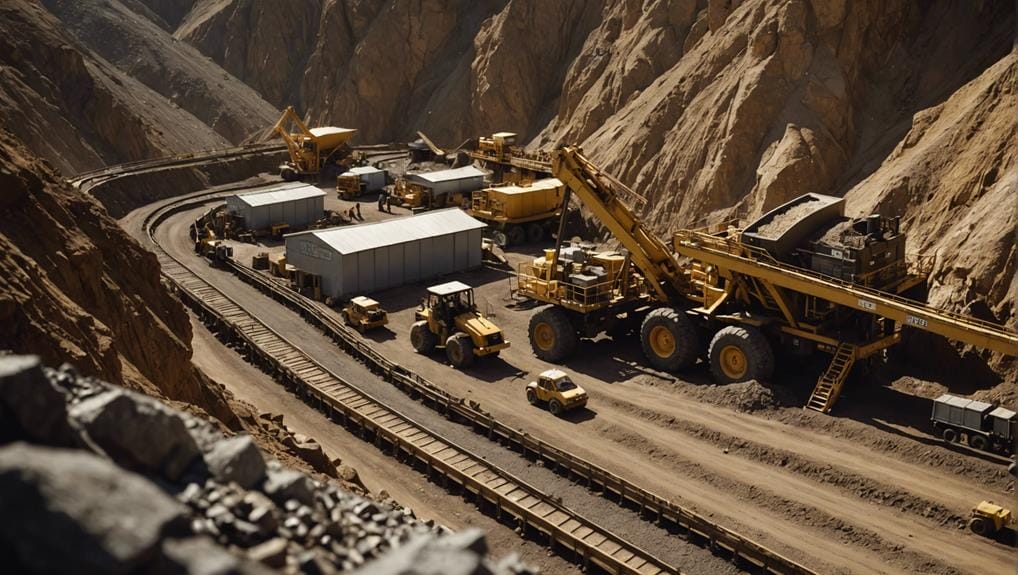
Understanding production costs, which encompass labor, materials, energy, and equipment maintenance, is essential for evaluating the profitability of gold and silver mining companies.
A crucial metric to consider is the all-in sustaining costs (AISC), which measures the total expenses of producing an ounce of gold or silver, including exploration, development, and sustaining capital. Lower AISC per ounce indicates higher profitability potential and margin resilience.
Monitoring AISC trends lets you assess a company's financial health and operational efficiency. This knowledge allows you to evaluate the competitive position of different mining companies, providing insights into which miners are likely to perform well.
Lower production costs ultimately enhance a company's profitability potential and competitive edge.
Reserves and Resources
Evaluating a mining company's reserves and resources is crucial for determining its long-term production potential and investment value. Reserves represent the economically viable portions of a mineral deposit, while resources encompass both reserves and potential future reserves. Proven and probable reserves are essential for financial reporting and investment decisions. Measured and indicated resources provide more reliability than inferred resources for investment evaluation. Economic factors such as metal prices, mining costs, and processing methods are critical in quantifying reserves. Investors prioritize companies with substantial reserves and resources to ensure sustained value and production potential.
| Terms | Description |
|---|---|
| Reserves | Economically viable portions of a deposit |
| Resources | Includes both reserves and potential future reserves |
| Proven and Probable Reserves | Crucial for financial reporting and investment |
| Measured and Indicated Resources | More reliable than inferred resources |
Management Team

When evaluating gold and silver mining companies, it is important to focus on the management team's leadership track record, strategic vision, and industry experience.
A team with a proven history of profitable project development and successful operations is invaluable. Their ability to communicate effectively with investors and maintain transparency is essential for building trust and shareholder value.
Leadership Track Record
A mining company's success often hinges on the management team's track record in executing projects and creating shareholder value. When evaluating a management team, consider the following:
- Experience: A history of successful mining projects and industry expertise is crucial.
- Capital Allocation: Assess their ability to invest company resources wisely.
- Strategic Decision-Making: Review their past decisions to navigate market and operational challenges.
- Shareholder Value: Check if they've consistently improved shareholder returns.
A strong leadership team with proven experience and strategic foresight can optimize production and seize market opportunities, significantly impacting the company's performance.
Effective cost management and capital allocation are vital for long-term investment potential. Assess these factors to make informed decisions.
Strategic Vision
Evaluating a mining company's strategic vision is crucial for assessing its potential for sustained growth and profitability. Key factors include the management team's ability to execute growth strategies, manage costs, and make smart capital allocation decisions that enhance shareholder value.
Leadership should demonstrate a clear vision for exploration, development, and operational excellence. Their experience in stakeholder engagement, encompassing community relations and environmental sustainability initiatives, is vital for long-term success.
Effective communication, transparency, and alignment of decisions with shareholder interests are also important indicators. A robust strategic vision from the management team significantly enhances a company's prospects in the gold and silver mining industry.
Industry Experience
Evaluating the industry experience of a mining company's management team is crucial for determining its potential success. Key factors to consider include the following:
- Proven track record in the mining sector
- Extensive operational expertise to tackle industry challenges
- History of successful project development
- Strong industry knowledge
A management team with a solid track record signifies reliability and competence. Their operational expertise ensures they can effectively manage the complexities of mining operations.
A history of successful project development highlights their capability to complete projects. Their in-depth industry knowledge enables them to make informed decisions, enhancing their potential for investment success.
Focusing on these factors will help you make a well-informed investment choice.
Geopolitical Risks
When evaluating gold and silver miners for investment, it's essential to consider geopolitical risks such as political instability, regulatory changes, and the threat of nationalizing assets. These risks can significantly impact mining operations, particularly in regions with unstable political environments. Changes in mining regulations and nationalization of assets can increase costs and cause operational disruptions. Additionally, resource nationalism, where governments emphasize domestic control over natural resources, can further complicate mining activities.
These factors can adversely affect a mining company's profitability and stock performance. To mitigate these risks, miners diversify operations across politically stable jurisdictions.
Thoroughly evaluating the geopolitical landscape allows for a better understanding of the potential challenges a mining company might face, aiding in making more informed investment decisions.
Growth Potential

The growth potential of gold and silver mining companies is closely tied to their success in exploration, resource expansion, and operational efficiency optimization.
Key factors to consider include:
- Exploration Success: Discovering new mineral deposits can significantly boost future production capabilities.
- Production Scalability: Increasing production as new resources are identified is crucial for growth.
- Reserve Replacement Ratios: Sustaining or enhancing reserves ensures long-term operational viability.
- Metal Prices: Higher metal prices can enhance revenue and profitability, driving further investment.
Assessing these factors provides insight into a mining company's ability to grow and succeed.
Financial Health
Evaluating the growth potential of gold and silver miners requires a thorough examination of their financial health to ensure they can sustain and capitalize on opportunities.
Start by analyzing free cash flow, which indicates the company's ability to generate cash after covering operational expenses.
Assess debt levels, as miners with manageable debt are generally less risky.
Liquidity ratios, such as the current ratio, reveal the company's capacity to meet short-term obligations.
Essential balance sheets that reflect assets over liabilities are crucial in this evaluation.
Monitoring working capital and cash reserves provides insights into the company's stability.
Additionally, scrutinize capital expenditure plans to determine how effectively the company utilizes its capital.
This comprehensive financial review will help ascertain the miner's ability to thrive.
Exploration and Hedging

Exploration and hedging are essential for gold and silver miners to maintain long-term profitability and manage risks effectively. Exploration projects uncover new mineral deposits critical for future mining operations, though the associated costs can significantly impact a company's financial health.
Hedging activities mitigate price risks by locking prices for future production, ensuring stability in cash flow. Evaluating a miner's approach to exploration and hedging involves several key considerations:
- Exploration costs: While high costs may strain finances, they have the potential to yield significant future gains.
- Success of exploration projects: Successful projects expand the resource base and increase production capacity.
- Hedging strategies: Effective hedging protects against price volatility and secures financial predictability.
- Balance between exploration and hedging: A well-balanced strategy demonstrates strong risk management and strategic planning.
Comprehending these factors is crucial for assessing a mining company's potential and overall health.
Conclusion
To make informed investments in gold and silver miners, it is crucial to assess various key factors. These include production costs, reserves, and resources. Evaluating the management team's experience, geopolitical risks, growth potential, financial health, exploration efforts, and hedging strategies is also essential. This thorough evaluation helps gauge a company's operational efficiency, profitability, and long-term sustainability.
By considering these factors, investors can identify promising investment opportunities in the precious metals sector. This ensures a well-rounded and strategic approach to building a diversified portfolio.
Investors should pay close attention to the interplay of these elements to make sound investment decisions in gold and silver mining companies. Understanding the industry dynamics and the specific circumstances of each company can lead to more successful investment outcomes.