When investing in gold bars or coins, you'll need to consider seven critical factors: physical form (bars vs. coins), purity levels (aim for 99.99%), weight options, pricing (spot price plus premiums), secure storage solutions, tax implications, and optimal portfolio allocation. Today's spot price of $2,397.43 per troy ounce serves as your baseline, while premiums typically range from 1-5% above spot. Understanding these essential elements will empower your precious metals investment strategy.
Our Quick Summary
- Compare premiums over spot price, as gold bars typically offer lower costs while coins may provide additional collectible value.
- Verify purity levels and authenticity through proper gold stamps, focusing on 24-karat pieces with 99.99% purity.
- Consider storage requirements and liquidity needs when choosing between larger bars and more flexible fractional coins.
- Evaluate tax implications, including the 28% maximum rate on long-term holdings and reporting requirements for all transactions.
- Assess market timing and spot price trends, currently at $2,397.43 per troy ounce, for optimal entry points.
Physical Gold as a Safe Haven Asset

When markets become volatile and economic uncertainty looms, investors often turn to physical gold as a time-tested safe-haven asset.
As a proven inflation hedge, gold's fixed supply helps preserve wealth during periods of currency devaluation and market turbulence. You'll find that gold prices typically move independently of stocks and bonds, making it an effective tool for portfolio allocation and risk management.
During times of crisis investing, physical gold's essential value and high gold liquidity make it particularly attractive.
While gold premiums may fluctuate, the metal's historical performance during economic uncertainty reinforces its role as a reliable store of value for long-term wealth preservation. The metal's impressive record high price of $2,409 per ounce in 2024 demonstrates its continued strength amid growing geopolitical tensions and economic instability.
Gold Bars vs. Gold Coins: Which Option Is Right for You?
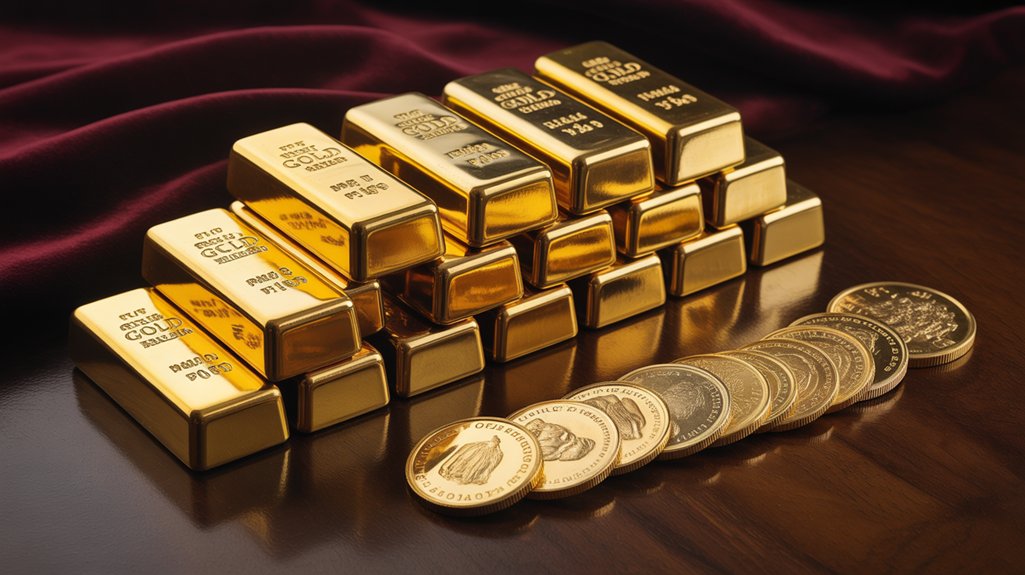
Physical gold offers distinct investment options, and choosing between gold bars and coins requires careful consideration of your investment goals.
Gold bars typically provide lower premiums over spot price, making them cost-effective for larger investments. Nevertheless, gold coins offer unique advantages, including collectible value, legal tender status with face value, and fractional weights for flexible investing.
Your choice should factor in liquidity needs and storage solutions. While gold bars may require more substantial security considerations due to their size, gold coins are easier to store and handle.
Consider that coins' higher premiums might be offset by their potential for appreciation through collectible value.
A strategic allocation of 5-10% of investments to gold can enhance your portfolio's stability and provide protection against market volatility.
Gold Purity and Weight: What Serious Investors Should Know

Understanding gold purity and weight stands as a cornerstone of successful precious metals investing, particularly for those aiming to build a strong portfolio.
When you're evaluating investment-grade gold, focus on 24-karat pieces, which offer 99.99% purity and maximum resale potential.
Gold weight, measured in troy ounces, varies between bars (typically 400 ounces) and coins (1/10 to 1 ounce), affecting both market price and liquidity.
Gold's diverse weight options, from massive bars to fractional coins, provide investors flexibility in building their precious metals portfolio.”
You'll want to verify authenticity through gold stamps indicating purity levels, as these markings help ensure you're getting genuine precious metals that command premium values in the marketplace.
Investors often prefer gold bars for their lower premium costs compared to coins, allowing more investment capital to go directly into the actual gold content rather than collectible value.
Pricing Factors: Spot Price, Premiums, and Market Timing

To successfully invest in gold bars and coins, you'll need to master three critical pricing components: spot prices, premiums, and market timing.
The spot price serves as your baseline, reflecting current market values influenced by supply and demand. You'll pay premiums above spot, typically 1-5% for standard items, with larger bars commanding lower transaction costs per ounce than smaller pieces.
When taking into account gold liquidity premium, bear in mind that dealer margins vary significantly.
Market timing affects your gold price premiums, thus monitor factors like geopolitical events and interest rates. To minimize gold volatility impact, compare offers from multiple gold dealers and focus on price forecasting before making purchases. Today's gold spot price of $2,397.43 per troy ounce represents the fundamental benchmark against which all premiums are calculated.
Secure Storage Solutions for Your Precious Metals

Once you've acquired your gold bars and coins, securing them properly becomes crucial for protecting your investment.
Protecting your precious metals investment starts with proper security measures immediately after purchase, ensuring long-term asset preservation.”
You'll need to choose between home storage, bank safe deposit boxes, or third-party storage services for your precious metals.
If you're opting for home storage, invest in a high-quality, fireproof safe and ensure you have adequate insurance coverage beyond standard homeowner's policies.
For institutional storage, select government-approved facilities, especially when storing IRA-held gold.
Regardless of your choice, maintain detailed documentation of purchases, storage agreements, and regular appraisals to verify your gold's ownership and value.
Tax Implications and Reporting Requirements for Gold Investors

When you're investing in physical gold, navigating the tax landscape requires careful attention to the distinct rules that govern precious metals investments. Understanding IRS regulations is essential, as gold's classification as a collectible impacts your tax implications significantly.
| Tax Aspect | Significant Considerations |
|---|---|
| Short-term Holdings | Regular income tax rates |
| Long-term Holdings | 28% maximum rate |
| Reporting Requirements | Must report all sales |
| Documentation Needed | Purchase and sale records |
| Common Mistakes | Incomplete record keeping |
You'll need to maintain thorough records of your transactions, as gold buyback programs and investment strategies must align with capital gains tax requirements. Consider consulting a tax professional about gold IRA options to optimize your investment approach.
Portfolio Allocation: How Much Gold Is Optimal for Diversification?

Beyond understanding the tax implications of gold investments, determining the right amount of gold for your portfolio stands as an essential decision in your investment strategy.
As a proven inflation hedge and capital preservation tool, gold bullion can help protect your wealth during market volatility.
- Keep your gold reserves at around 5% of your total portfolio allocation
- Consider reducing gold exposure if you're investing in other commodities
- Monitor your risk exposure in the gold market to maintain balanced diversification
- Align your gold investment with your long-term financial goals and risk tolerance