As gold prices soar to unprecedented levels of $2,180 per ounce in 2024, investors are increasingly drawn to this precious metal's security and stability. Facilitated by rising inflation, economic instability, and geopolitical uncertainties, gold's appeal as a safe-haven asset has never been more pronounced. You should consider central banks' purchasing behavior, and a weakening dollar further underscores gold's potential to hedge against purchasing power erosion.
Should you invest in gold 2024, allocating 5-10% of your portfolio to this precious metal, or are there underlying risks that warrant caution? The answer could shape your investment strategy for years to come, taking into account gold’s current market dynamics and long-term prospects.
Our Quick Summary
- Gold prices reached a record high of $2,180 per troy ounce in 2024, reflecting strong market performance.
- Economic uncertainty and geopolitical tensions enhance gold's appeal as a safe-haven investment.
- Central banks' increased gold purchases and weakening dollar support gold's role as a hedge against inflation.
- Diverse investment options, including ETFs and mining stocks, offer liquidity and accessibility for gold investments.
- Allocating 5-10% of your portfolio to gold can enhance stability and reduce overall investment risk.
Current State of the Gold Market

The gold market in 2024 is experiencing unprecedented highs, with prices reaching a record $2,180 per troy ounce, marking an impressive 11% increase over the past year.
Several crucial factors, including inflation and economic uncertainty, drive this uptick.
Gold market trends strongly rely on central bank buying as institutions diversify reserves amid currency and bond volatility.
The weakening dollar and inflationary pressures position gold as a strong hedge against purchasing power erosion.
As a safe-haven asset, gold's appeal has surged amid geopolitical tensions.
Effective gold investment strategies now emphasize the metal's role in risk mitigation and portfolio diversification, highlighting its enduring value in volatile economic climates.
Historical Performance of Gold
Gold's historical performance underscores its long-term stability and resilience as an investment.
Notable milestones include its adoption by the Egyptian empire in 1500 BC and the crucial shift in 1971 when the USD was decoupled from gold, transforming it into a freely traded commodity.
These events, alongside gold's ability to retain value during economic crises, illustrate its enduring appeal as a safe-haven asset.
Gold's Long-Term Stability
Throughout history, gold has maintained its position as a treasured asset, dating back to its use as a medium of exchange around 4000 BC.
Gold investment trends indicate that, despite gold price volatility, it remains a favored hedge during economic instability. Historically, gold demand surges due to geopolitical tensions and inflation, principal gold price drivers.
The cessation of the gold standard in 1971 marked a shift, yet gold's reliability persisted. During market downturns, gold has shown less volatility over the past 50 years than stocks and bonds.
This consistency underscores gold's role as a long-term hedge against currency devaluation, appealing to investors seeking stability.
Historical Price Milestones
In 2024, gold achieved a significant milestone by reaching a record high of approximately $2,180 per troy ounce, reflecting an 11% increase over the past year.
Historical gold prices illustrate gold's resilience as a store of value since 4000 BC. Despite periods of volatility and gold investment risks, such as price fluctuations and market speculation, the metal remains a favored asset.
Analysts' gold market forecasts often highlight the influence of central bank policies and economic conditions. Increased gold demand in emerging markets further supports its price.
The 1971 suspension of the USD's convertibility to gold significantly altered pricing dynamics, underscoring the complex interplay between economic indicators and gold's appeal as a safe-haven asset.
Impact of Economic Events
The historical price milestones of gold highlight its enduring appeal as a store of value, particularly in times of economic uncertainty. Gold price charts disclose substantial growth, with a record high of $2,180 per troy ounce in 2024, underscoring its role as a safe-haven asset. Gold's 11% appreciation since 2020 showcases its resilience during global economic concerns. The Federal Reserve's interest rate adjustments often enhance gold's appeal as a non-yielding asset. Furthermore, central banks have strengthened gold prices through increased purchases and diversifying reserves against currency and bond volatility.
| Year | Gold Price (per troy ounce) |
|---|---|
| 2020 | $1,800 |
| 2021 | $1,950 |
| 2022 | $2,100 |
| 2024 | $2,180 |
Benefits of Investing in Gold
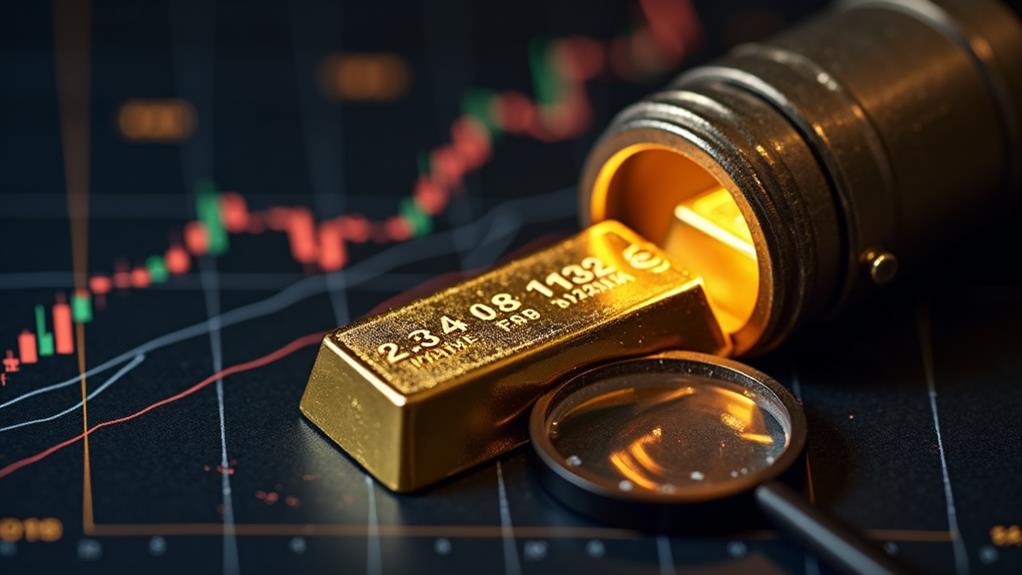
Gold has long been esteemed as a strong investment, particularly during economic uncertainty. In 2024, gold reached a record high of approximately $2,180 per troy ounce, showcasing its stability.
The risks and rewards of gold investment balance favorably, with an 11% increase over the past year and a 6% rise year-to-date. Gold bullion, mining stocks, and trading platforms offer diverse entry points into the precious metals market.
As a hedge against inflation and currency fluctuations, gold protects purchasing power, especially when the dollar weakens. Central bank buying and anticipated interest rate cuts boost its safe-haven appeal.
A diversified portfolio with 5-10% gold allocation can significantly improve stability and reduce overall risk.
Risks of Investing in Gold
Investing in gold carries several risks that investors should consider.
Market price volatility can lead to significant fluctuations influenced by factors such as market speculation, geopolitical events, and changes in supply and demand.
Moreover, liquidity and accessibility can be a concern, as gold may be less liquid compared to other asset classes and
storage and insurance costs for physical gold can impact overall returns, requiring careful investment planning.
Market Price Volatility
Amid the constantly changing economic landscape, market price volatility remains a significant risk for those pondering gold investments in 2024.
Gold prices can be highly volatile, influenced by geopolitical tensions and interest rate changes, complicating short-term predictions. In 2024, the price of gold reached an all-time high of approximately $2,180 per ounce, reflecting market speculation and economic uncertainties.
External factors such as central bank purchasing trends and currency fluctuations can lead to unexpected price movements.
Investors should likewise consider:
- Gold market manipulation can distort actual value.
- Federal Reserve policies impacting interest rates.
- Gold production costs affecting supply and demand dynamics.
- Gold investment portfolios lack income generation, incurring storage and insurance costs.
Understanding these risks is vital for potential investors.
Liquidity and Accessibility
When pondering gold investments in 2024, liquidity and accessibility present notable risks that potential investors must carefully evaluate.
Physical gold, such as coins or bars, often involves extended selling times and transaction costs.
Conversely, Gold ETFs offer liquid investment options, enabling swift buying and selling on stock exchanges.
Investing in gold mining companies provides liquidity through stock markets and may yield dividends, though with price volatility tied to company performance and gold prices.
Gold investment funds and digital gold also offer accessible electronic transfer options, though it is vital to select reputable platforms to avoid fraud.
Consulting gold investment advisers can help steer through these intricacies, ensuring informed decisions.
Proper gold storage remains integral to maintaining investment security.
Storage and Insurance Costs
How do storage and insurance costs impact the profitability of gold investments? When investing in physical gold, secure storage solutions such as safe deposit boxes or specialized facilities are necessary, and these can incur significant monthly or annual fees.
Moreover, insuring gold against theft or loss is fundamental, with costs varying based on value. Understanding these expenses is vital as they can significantly affect net returns.
Key considerations include:
- Storage fees: Safe deposit boxes or specialized facilities.
- Insurance premiums: Varying costs based on gold value.
- Transaction costs: Buying and selling fees.
- Transportation and handling: Supplementary expenses.
Factoring in these costs alongside gold taxation, refining, and import/export implications is fundamental for comprehensive gold investment education.
Impact of Global Conditions

Global conditions in 2024 have significantly influenced the gold market, pushing prices to unprecedented levels. The record high of approximately $2,180 per troy ounce reflects various factors.
The weakening US dollar strength and expectations of Federal Reserve interest rate cuts have increased gold's appeal as an inflation hedge. Central banks, diversifying their gold reserves, are bolstering prices amid currency and bond market volatility.
Geopolitical tensions further reinforce gold's safe-haven status. Crucial global economic indicators, such as lower interest rates and high debt levels, prompt investors to reconsider gold investment myths and favor gold futures as a stable option during market fluctuations.
These dynamics underscore gold's enduring value in uncertain economic climates.
Ways to Invest in Gold
Given the significant impact of global conditions on the gold market in 2024, investors are increasingly exploring various methods to capitalize on gold's enduring value.
Should you invest in gold 2024, consider the following options:
- Physical Gold: Buying gold jewelry, bullion, or coins offers direct ownership but involves storage and insurance costs.
- Gold ETFs: Funds like SPDR Gold Shares and iShares Gold Trust provide a hassle-free way to invest, tracking gold prices without needing physical storage.
- Gold Mining Stocks: Companies like Newmont and Barrick Gold offer exposure to gold price movements and potential dividends.
- Digital Gold Platforms: These platforms allow for electronic purchase and storage of gold, offering liquidity and ease of transactions.
Consult gold research reports and attend gold investment seminars to make informed decisions.
Our Final Thoughts
To summarize, the current economic landscape, characterized by rising inflation and geopolitical tensions, underscores the strategic value of gold as a hedge against financial instability. With gold prices at a record high and central banks increasing their purchases, a 5-10% portfolio allocation in gold may offer substantial benefits. Nevertheless, potential investors should weigh the fundamental risks and market volatility. Exploration through various investment avenues can further improve portfolio resilience during uncertain times.